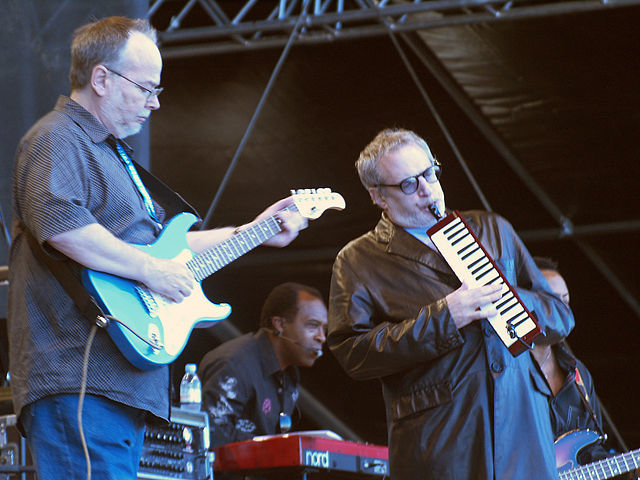
Donald Fagen was born on 10 January 1948 in New Jersey, America. He was seven when he first saw Chuck Berry on TV. From that moment on, all his pocket money went on rhythm & blues singles. A few years later, in the 1960s, he discovered jazz. He gave away his R&B records and fully embraced jazz.
Jazz
Jazz was all the rage at that time and Donald threw himself into it completely. Everything revolved around jazz for him. He taught himself to play the spinet at the age of 11. By the time he was nearly finished with secondary school, he had found two fellow students to form a jazz trio with him.
Walter Becker
In 1965 he went to university, where he studied literature and music. In his third year he met the French guitarist Walter Becker. They worked together on songs and eventually formed their own band called Steely Dan ('Rikki Don't Lose That Number'), with which they toured America and England in '73 and '74. During that time they also released two albums, Can't Buy A Thrill and Countdown to Ecstasy. After those two albums they did record new material but no longer toured with Steely Dan.
Digital
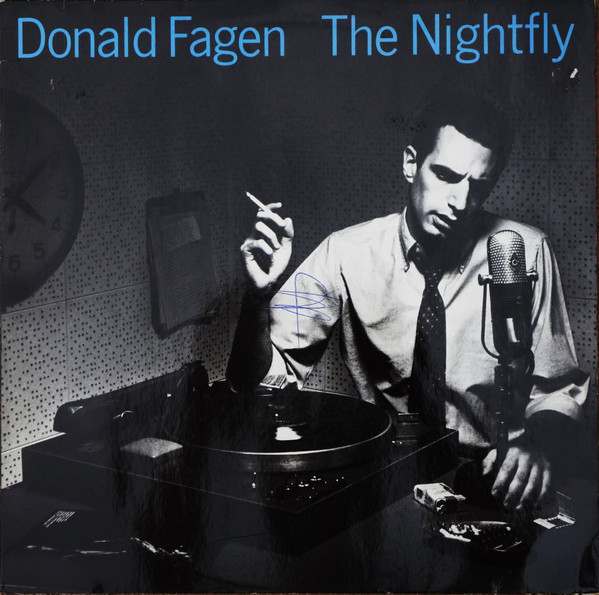
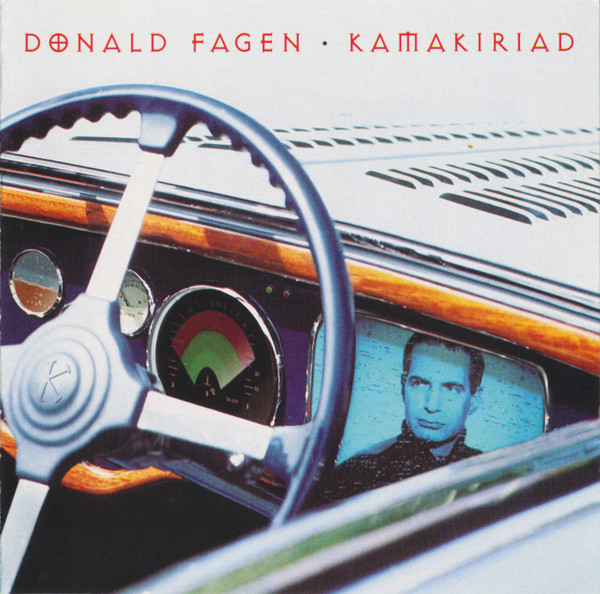
During the 1980s Becker and Donald largely went their separate ways. Donald in New York and Becker in Hawaii. Donald's innovative album The Nightfly was immediately a classic. It was also one of the first digitally recorded records. Donald was involved in various projects. He composed songs for several films and other artists and co-produced. He also occasionally wrote a column about film music. The following decade he worked with his future wife, Libby Titus. In 1992 Becker also returned to New York. He produced Donald's solo album Kamakiriad.
Two Against Nature
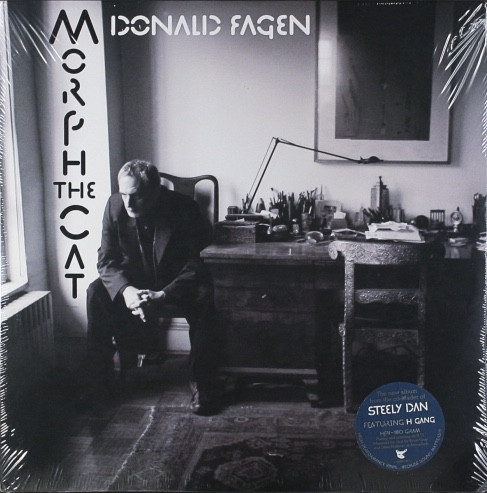
A Steely Dan compilation CD was released. In '96 they planned to record a new Steely Dan album, which eventually came out in 2000 under the name Two Against Nature. A few months later Steely Dan was inducted into the Rock 'n Roll Hall of Fame. The album Everything Must Go was released in 2003. Donald Fagen also released solo material, such as the album Morph the Cat in 2006.
Top 2000
In the 23rd edition of the Top 2000 there are no entries from Donald. If you want to give him a boost, go to our Top 2000 inspiration playlist on Spotify.
Sunday Morning Classic
On 9 October 2022 we dedicated our stage at Slijkstraat 6 in Groede to Donald. With his album The Nightfly he was our Sunday Morning Classic.
At the time, in 1982, opinions about the first solo album by the Steely Dan singer-keyboardist were quite divided. Smooth often means slippery, but not here; Fagen is clearly sincere, the music comes from his heart, he takes his compositions very seriously and takes the trouble to record them perfectly with the best musicians. Brilliantly arranged too. Smooth, but it makes me glad. It is probably also Donald Fagen's most personal album.
The Nightfly is a concept album in the best sense of that loaded word: a collection of songs that playfully approach one theme from different angles. In a tight 39 minutes Donald Fagen brings to life a whole vanished world: that of an American teenager in the late '50s captivated by (jazz) music, the beat poets and the longing for the exciting life that awaits him in a few years.
A nightfly is a DJ on the night shift; his loneliness is palpable in the photo. DJ Fagen is too tired to play records anymore and chain-smokes while rambling into the microphone. It is after four o'clock. The black-and-white photo suggests not only the nocturnal hour and loneliness, but also the '40s and '50s. The music on the album fully breathes the atmosphere of that time, for example the swinging Ruby Baby (a cover of Leiber and Stoller), the jazzy 'Walk Between the Raindrops' and 'Maxine', with its five-part vocal harmonies. Meanwhile, the early '80s digital production is tight and modern. The record still sounds fresh and enjoyable.
The exceptionally large RCA turntable with a platter for 14-inch records and the monstrous Para-Flux A-16 tonearm from 1947 is a snapshot of the times. These gramophone records often contained mood music to enliven, for example, reports. The quality of those battered and scratched records can be described as rustic, because they had to be "wear-resistant" for the frequent, mostly rough use. However, on the platter lies an ordinary LP, Sonny Rollins and the Contemporary Leaders, real music to stay awake for. Very wisely, Fagen does not play it, because the needle pressure of the crystal cartridge was over 3 grams, enough to ruin LPs in no time...
source: NPO and various websites photo: Kotivalo (own work), album cover