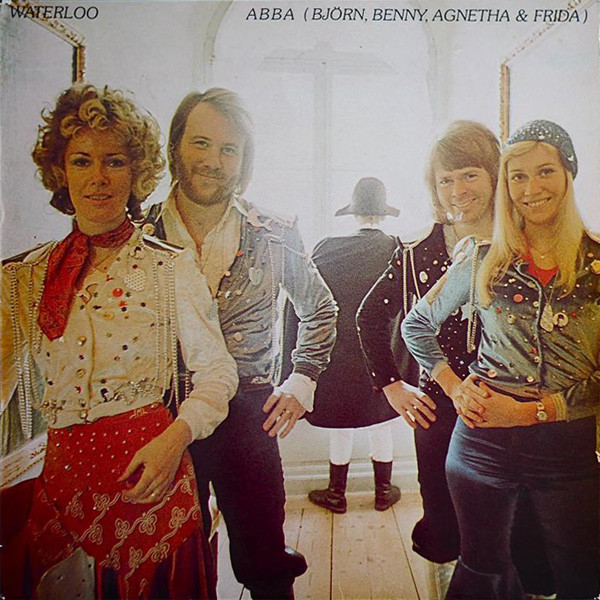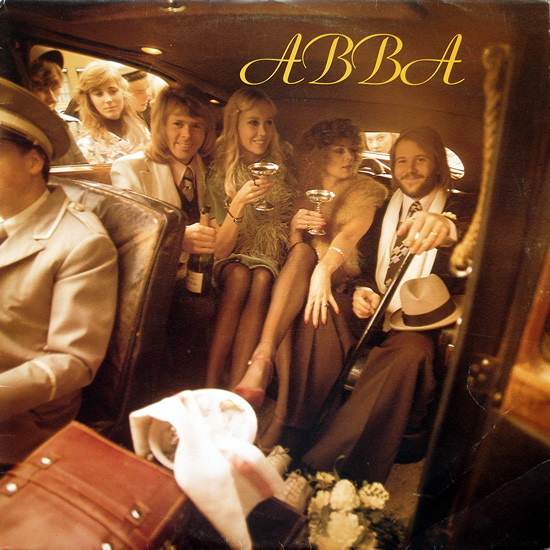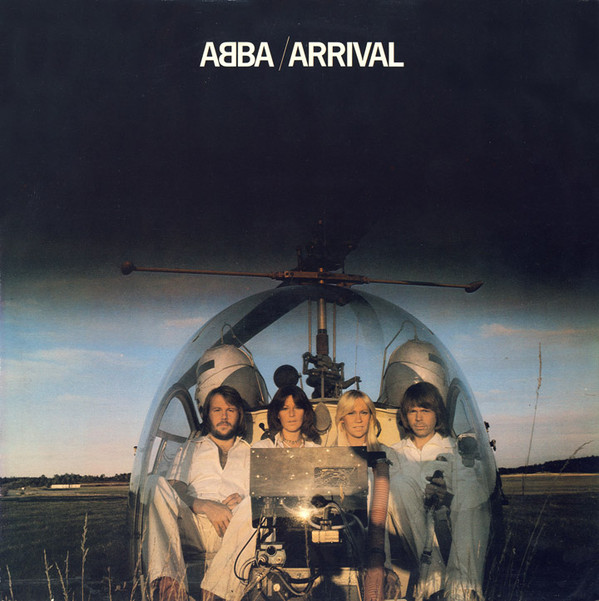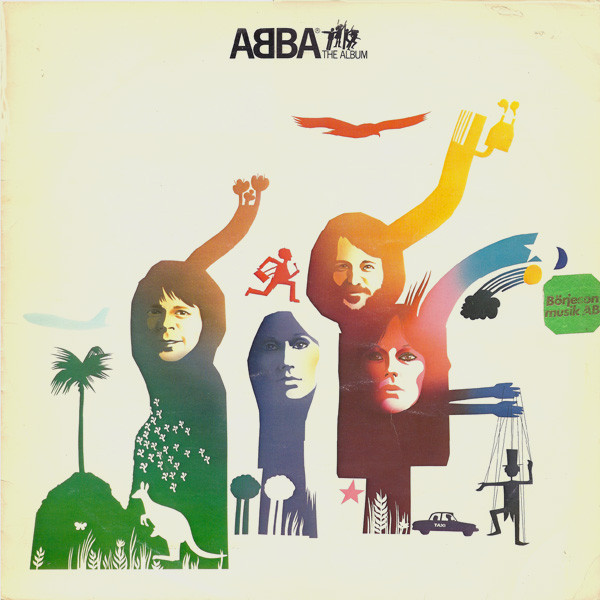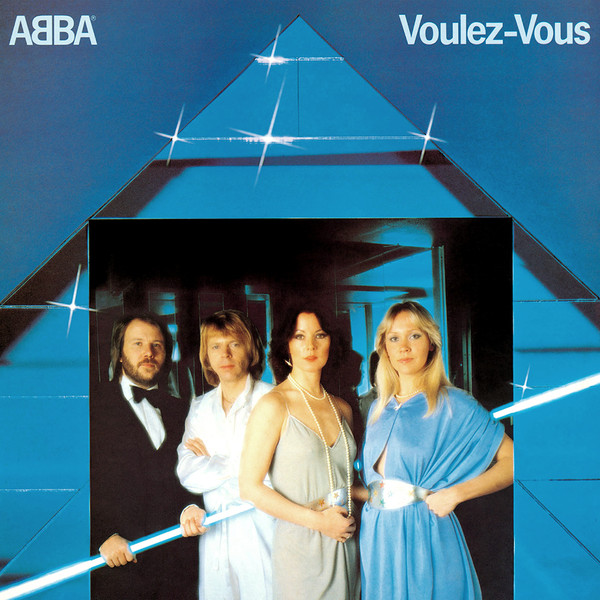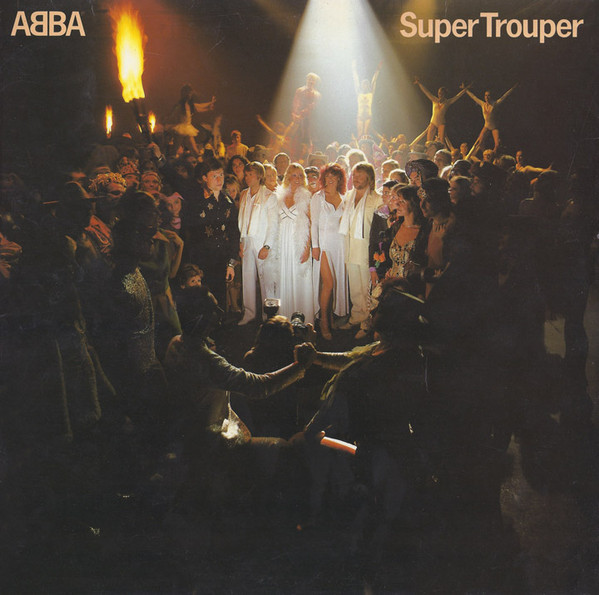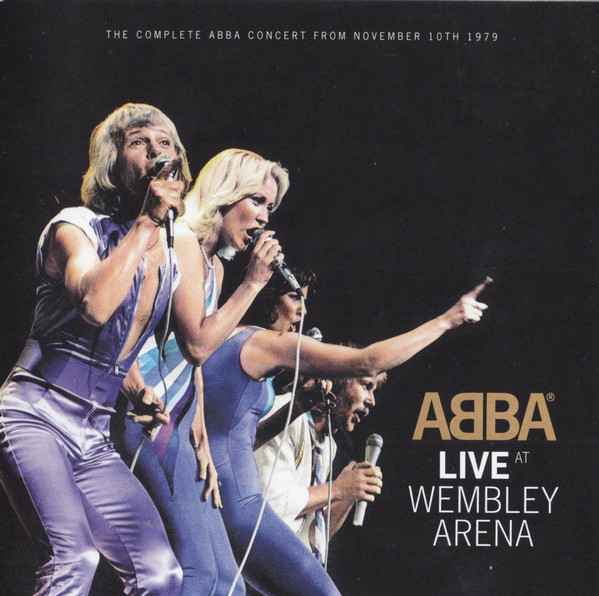
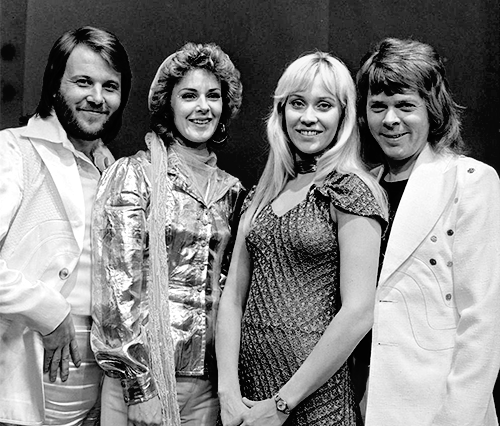
The history of ABBA begins in the summer of 1966. That is when Björn Ulvaeus (born 25 April 1945) and Benny Andersson (16 December 1946) first met. The then 21-year-old Björn was a member of the Swedish folk group The Hootenanny Singers; the one-year-younger Benny played keyboards in the hugely popular pop group The Hep Stars. With this group, also called ‘the Swedish Beatles’, he scored a European hit with the song 'Sunny Girl' in 1968. Björn and Benny decided to start writing songs together, encouraged by their record boss and later manager Stig Anderson. He recognised the duo's compositional talent and predicted a golden future for them.
In Love
Meanwhile, Björn had fallen in love with the fair-haired singer Agnetha Fältskog (5 April 1950), who already had a few solo hits to her name in Scandinavia. In 1971, Björn and Agnetha married, an event that received much attention in the Swedish media. Benny also fell in love, with the Norwegian-born Anni-Frid ‘Frida’ Lyngstad (15 November 1945), to whom he quickly became engaged but only married in 1978. Like Agnetha, Frida was already quite successful as a solo singer in Scandinavia. From 1970, Björn, Benny, Agnetha and Frida regularly worked together. For example, they sang backing vocals on the album Lycka by Björn & Benny, after which the four decided to form the group Festfolk.
Eurovision Song Contest
Soon the name Festfolk was changed to Björn & Benny & Agnetha & Anni-Frid. Under that name, the quartet took part in the Swedish National Song Contest in 1973, where they finished third with the song 'Ring Ring' but still scored a big hit in Sweden. Ring Ring was also a big hit in the Netherlands in the summer of 1973. A year later, Björn & Benny & Agnetha & Anni-Frid, under the new name ABBA – an acronym of the first names of the four – again took part in the Swedish National Song Contest, which they won with the song Waterloo. And so on 6 April 1974, ABBA took to the stage in the English seaside town of Brighton, where the Eurovision Song Contest was held that year. Dressed in glitter suits, ABBA won the hearts of almost all Europeans. They won the contest convincingly, after which Waterloo became a huge hit throughout Europe.
Millions
After the success of 'Waterloo', one international hit followed another at a rapid pace. Europe, but also the United States, South America and Asia, fell massively for the unique ABBA sound. Hits such as 'I Do I Do I Do I Do', 'S.O.S.', 'Mamma Mia' (all from 1975), 'Fernando', 'Dancing Queen', 'Money Money Money' (1976), 'Knowing Me Knowing You', 'The Name Of The Game' (1977), 'Take A Chance On Me', 'Eagle/Thank You For The Music' (1978), 'Chiquitita', 'Voulez-Vous', 'Gimme! Gimme! Gimme!', 'I Have A Dream' (1979), 'The Winner Takes It All' and 'Super Trouper' (1980) sold millions and millions of copies worldwide. Meanwhile, ABBA toured almost the entire world, during which they gave two memorable concerts in the Netherlands: in 1977 at the Jaap Edenhal Amsterdam and in 1979 at Ahoy’ Rotterdam. The successful film ABBA: The Movie contains footage of ABBA's Australian tour.
End
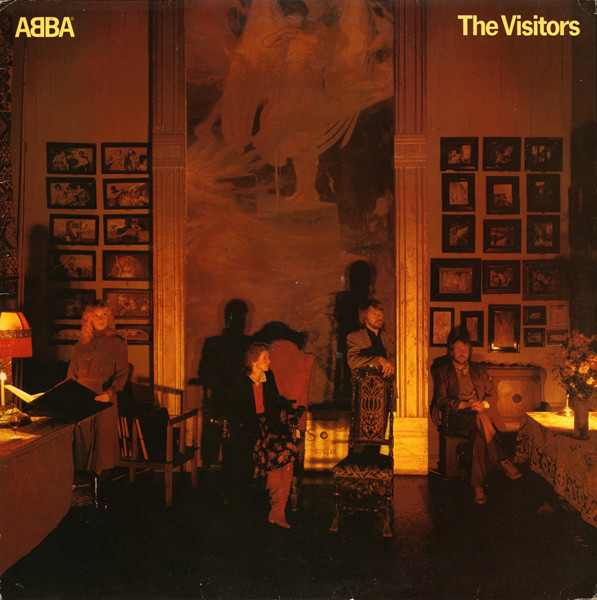
Meanwhile, all the fame and success began to take its toll. Björn and Agnetha announced their divorce in 1979, followed two years later by Benny and Frida. For the time being, ABBA's continuation did not seem to be in jeopardy. In 1981, the album The Visitors was released, featuring the worldwide hits 'One Of Us' and 'Head Over Heels'. The following year, ABBA was back in the studio to record the next album. But then it became clear that both divorces did indeed affect ABBA's magic. A few more singles followed, but the album was never completed. In December 1982, it was announced that ABBA was temporarily splitting up. Ultimately, this proved to be the definitive end for the Swedish supergroup. ABBA never reunited as a group afterwards.
Reunion
In the years that followed, Agnetha and Frida made various solo albums; Björn and Benny also continued to work together. Together they wrote and produced successful theatre productions such as the musical Mamma Mia!, based on ABBA's songs. Although Björn, Benny, Agnetha and Frida are now friends again – all four were present at the premiere of the film Mamma Mia! in 2008 – a reunion of ABBA is no longer on the cards. And if ABBA ever rises from the ashes, it certainly won't be for the money. A few years ago, an offer of one billion dollars to have ABBA perform live one more time was politely but firmly declined by Agnetha, Björn, Benny and Anni-Frid.
Top 2000
In the 23rd edition of the Top 2000, ABBA is listed with the following entries:
Sunday Morning Classic: The Visitors
On 29 November 2020, ABBA was our Sunday Morning Classic with the album The Visitors.
ABBA is remembered as one of the best pop groups of all time, with the songwriting team of Benny Andersson and Bjorn Ulvaeus writing classic after classic. The two lead vocalists, Agnetha Faltskog and Anni-Frid Lyngstad, were also masters of harmony and as a group they produced some of the best and most memorable hits of the seventies.
Thematically, The Visitors is mostly dark and reflective, but rarely depressing. The lyrics touch on the sadness of a parent watching a child grow up ("Slipping Through My Fingers"), breakups ("One of Us"), and, in a very rare political move, the Cold War and, more specifically, secret meetings against the communist regime ("The Visitors.") Musically, it is more ambitious and consistently more interesting than all their other albums.
The beautiful but ominous and sad "Soldiers" is another highlight, as is the stripped-down and slow lullaby "Like An Angel Passing Through My Room."
"When All Is Said and Done" is one of the most cheerful songs on the album and features an uplifting, optimistic melody.
The quirky "Two for the Price of One", possibly the only song by a regular pop group that refers to a threesome, is also quite humorous and light-hearted, but even more ambitious than it seems.
The beautiful and sad "One of Us" was the only big hit and nearly became the group's 10th official UK number 1 hit in 1981.
One of the most ambitious songs on the album is 'I Let the Music Speak', with strong classical and musical influences.
The Visitors is one of the saddest but most intriguing and surprisingly beautiful albums by a super pop group. It is the most "album"-like of all ABBA albums, and probably the group's artistic peak. The Visitors is perhaps ABBA's most remarkable and unexpected album. It seemed inevitable, and indeed The Visitors turned out to be ABBA's last original album. Bjorn and Agnetha were coming out of a messy divorce and Benny and Frida were separating when work on the album began. The atmosphere was tense and uncomfortable, and this is reflected on the album.
The songs require more attentive listening to enjoy, as with the best albums, and as a swan song it is a fine achievement – melodic, ambitious, unique and interesting. A fine record.
Source: Jan Liebregts, NPO and Wikipedia
Photo: Beeld en Geluid (AVRO)